
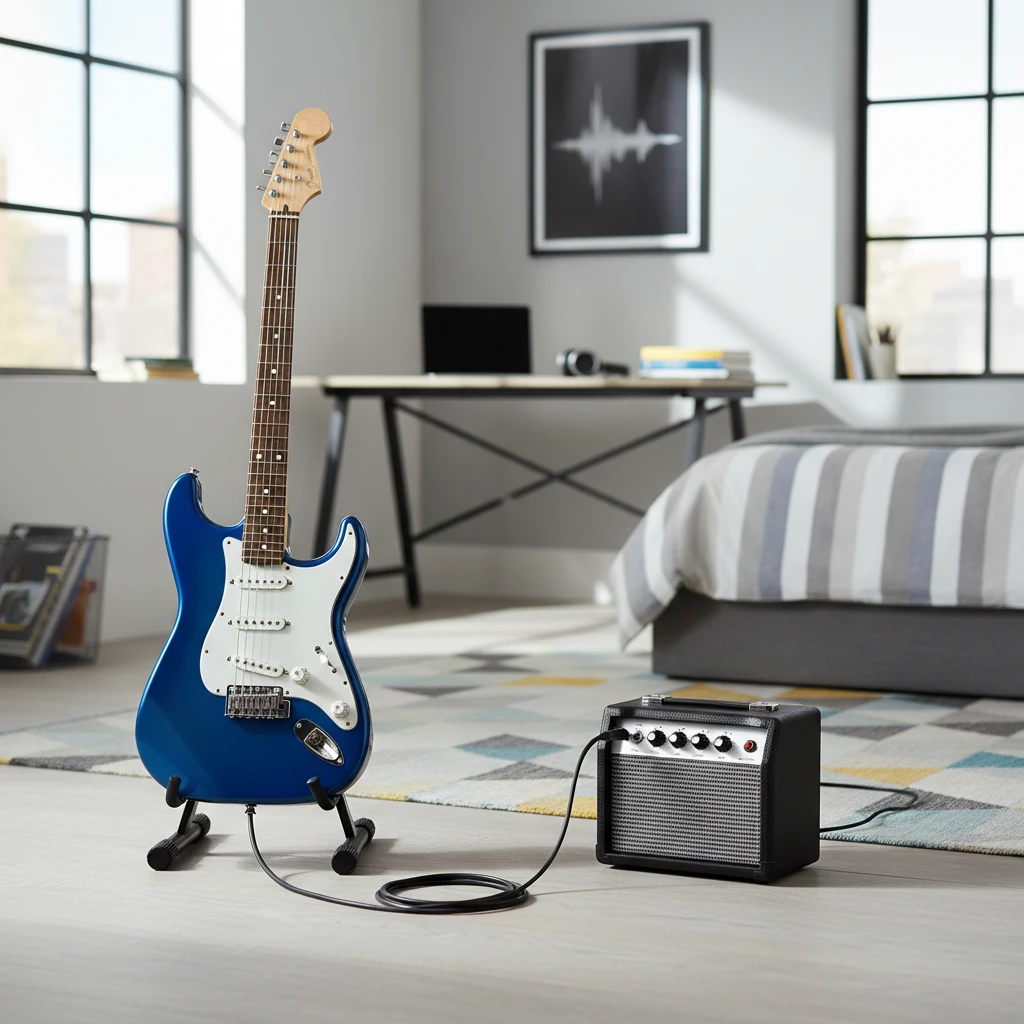
Your amp matters as much as your guitar. It shapes your tone, how much you enjoy practicing, and how quickly you improve. The market is crowded with tubes, modelers, watts and speaker sizes, so a first purchase can feel overwhelming. This guide explains what matters, what doesn’t, and how to pick an amp you won’t outgrow in three months.
Start With Where and How You Will Play
Before you look at any product, answer three questions honestly:
- Where will you play? A bedroom, an apartment with thin walls, a garage, or a rehearsal room each call for a different amp.
- What styles do you love? Clean pop and jazz need different features than classic rock, blues or metal.
- What is your real budget? Remember cables, a strap and possibly a few pedals on top of the amp.
Most beginners play at home at moderate volume, so a small, versatile practice amp is usually the smartest choice.
The Main Types of Guitar Amps
Solid-State Amps
Solid-state amps use transistors instead of tubes. They are affordable, lightweight, durable and need almost no maintenance. Their clean tones are often excellent, and many modern models include built-in effects. For a first amp, this is the safest and most economical category.
Tube (Valve) Amps
Tube amps are loved for their warm, dynamic and responsive sound. They also cost more, weigh more, and need eventual tube replacement. Many tube amps only sound their best when pushed loud, which is impractical in a small room. Low-wattage tube amps exist, but they rarely make sense for a complete beginner on a tight budget.
Modeling Amps
Modeling amps use digital processing to imitate many classic amps and effects in one box. They are the most flexible option for a newcomer, because you can explore clean, crunch and high-gain sounds without buying extra gear. Many offer USB recording, headphone outputs and smartphone apps for editing sounds.
Hybrid Amps
Hybrids combine a tube preamp or power stage with solid-state or digital circuitry. They try to deliver tube feel at a lower cost. They can be great, but they usually sit above the typical first-amp budget.
How Many Watts Do You Actually Need?
Wattage is the most misunderstood spec. More watts means more clean headroom and volume, not necessarily better tone. As a rough guide:
- 1 to 10 watts: Ideal for bedroom practice and quiet playing. Great for apartments.
- 10 to 25 watts: The sweet spot for most beginners. Plenty loud for home use and even light jamming with a drummer who plays softly.
- 30 to 50 watts: Better for small rehearsals and gigs, but often too loud for home use unless the amp has a power-reduction feature.
- 50 watts and above: Overkill for a first amp unless you already play with a band.
A solid-state or modeling amp in the 10 to 30 watt range covers nearly every beginner situation.
Speaker Size and Amp Format
Most practice amps are combo amps, with the amplifier and speaker in a single cabinet. Speaker sizes of 6.5 to 12 inches are common. An 8-inch speaker is compact and fine for practice, while a 10 or 12-inch speaker gives fuller low end and more presence. Avoid separate heads and speaker cabinets for now. They cost more and add complexity you don’t need yet.
Features That Help Beginners Most
- Headphone output: Essential if you live with others or want to practice late at night.
- Aux or Bluetooth input: Lets you play along with songs and backing tracks, which speeds up learning.
- Built-in effects: Reverb, delay and chorus make practice more inspiring without extra pedals.
- Multiple channels: At least a clean and a gain or overdrive channel lets you explore different styles.
- USB audio interface: Useful if you want to record ideas straight into your computer.
- Built-in tuner: A small feature that saves money and hassle.
- Simple controls: Gain, volume, bass, mid and treble are enough to learn how tone shaping works.
Match the Amp to Your Musical Style
Clean, Pop, Funk and Jazz
Look for an amp with clear, warm clean tones and plenty of headroom. Solid-state amps and many modelers do this very well.
Blues and Classic Rock
You want a good crunch and responsive overdrive. A modeling amp with British and American amp voicings is a flexible choice, and a small tube amp is a nice upgrade later.
Hard Rock and Metal
Choose an amp with a dedicated high-gain channel or realistic gain models. Tight low end matters, so a 10 or 12-inch speaker helps.
Popular Beginner-Friendly Amp Lines
Models change often, so check current reviews, but these respected lines consistently suit first-time buyers:
- Boss Katana series: Versatile, great tones and several sizes to choose from.
- Fender Mustang series: Many built-in amp models and effects, with easy editing.
- Marshall Code and MG series: Rock-focused sound with modern features.
- Yamaha THR series: Compact, stylish and excellent for quiet home playing.
- Positive Grid Spark: App-driven, with smart jam features for learning songs.
- Orange Crush and Blackstar Fly or ID:Core: Strong tone in small, affordable packages.
Setting a Realistic Budget
You can find a very capable beginner amp without spending a fortune. Entry-level amps with good tone and useful features sit at the lower end of the price range, while mid-range amps offer better speakers, more effects and sturdier construction. Spending a little extra on a quality 20 to 30 watt modeling amp often saves you from replacing it within a year. Used amps are also a smart option, since solid-state amps from reputable brands are tough and hold their value. Just test every knob and the input jack for crackling.
Common Mistakes to Avoid
- Buying too much power: A loud amp you can’t turn up is wasted money and annoys the neighbors.
- Ignoring headphone options: You will be glad to have them sooner than you think.
- Chasing brand names only: Features and fit matter more than a logo.
- Skipping a test: Whenever possible, play the amp with your own guitar before buying.
- Forgetting return policies: If you buy online, make sure you can send the amp back if it disappoints.
Quick Checklist Before You Buy
- Is the wattage appropriate for where you play most?
- Does it have a headphone output and an aux input?
- Does it offer at least clean and overdriven sounds?
- Are the controls easy to understand?
- Does the sound inspire you to keep playing?
- Does the price leave room for cables and accessories?
Frequently Asked Questions
Should my first amp be a tube amp?
Usually not. Tube amps are wonderful but pricey and heavy, and they need volume to shine. A good solid-state or modeling amp teaches you the same fundamentals for less money.
Can I use any amp with any electric guitar?
Yes. Any standard electric guitar connects to any guitar amp with a regular instrument cable. Do not plug a guitar into a bass amp or a PA system without understanding the differences, as the sound may be poor and the speaker could be at risk.
Is a 10-watt amp loud enough?
For home practice, absolutely. A 10-watt solid-state amp can be surprisingly loud. For playing with a drummer, step up to 30 watts or more.
Will I need to upgrade soon?
If you pick a versatile modeling amp with good features, you can keep it for years. Even when you upgrade, it remains a handy practice amp.
Final Thoughts
The best first electric guitar amp is the one that fits your space, suits your favorite styles and makes you want to pick up your guitar every day. Focus on a moderate wattage, a headphone output, a few useful sounds and a price that feels comfortable. Get those basics right and you will have an amp that supports your progress for a long time.

Deixe um comentário