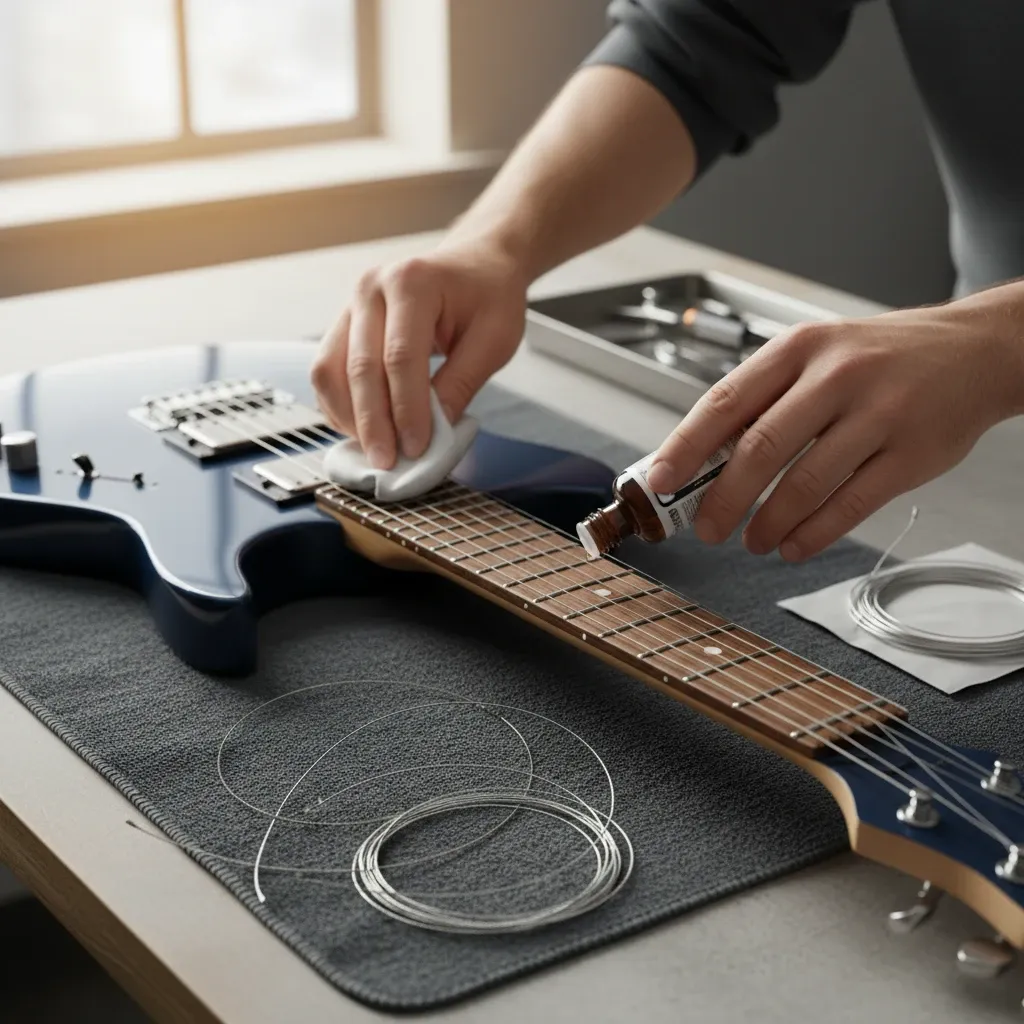
Over time, every fretboard collects sweat, skin oils, dust and microscopic bits of string residue. This grime dulls your tone, makes strings feel sticky and can even speed up fret and string wear. The good news is that learning how to clean an electric guitar fretboard is easy, cheap and takes less than twenty minutes. This guide walks you through the whole process, whatever wood your neck is made of.
Why Cleaning Your Fretboard Matters
A clean fretboard is more than a cosmetic upgrade. Built-up gunk affects how your guitar plays and sounds.
- Better feel: Bends, slides and vibrato are smoother when the surface is free of sticky residue.
- Brighter tone: Dirty strings and frets lose sparkle faster. Clean contact points keep sustain and clarity.
- Longer string life: Oils and dirt corrode strings. Removing them helps strings last longer.
- Healthier wood: Unfinished woods such as rosewood and ebony can dry out and crack if they are neglected.
- Fret protection: Grime packed along the fret edges can lead to tarnish and rough spots.
What You Need Before You Start
You do not need expensive gear. Most of these items are probably already in your gig bag or house.
- A few clean, soft microfiber cloths
- A soft-bristled toothbrush or a dedicated guitar cleaning brush
- Fretboard conditioner or a guitar-safe lemon oil (for unfinished wood only)
- 0000 (extra-fine) steel wool or a fretboard-safe abrasive pad, for stubborn grime
- Painter’s tape or a fret guard to protect the wood while polishing frets
- Naphtha-based or guitar-specific cleaner (optional, for heavy buildup)
- Fresh strings, if you are due for a change
Identify Your Fretboard Type First
The right method depends on the material. Using the wrong product can leave residue or damage the finish, so take a moment to check.
Unfinished Wood: Rosewood, Ebony and Pau Ferro
These boards are porous and usually look darker and slightly matte. They benefit from occasional conditioning because they can dry out over time.
Finished Wood: Maple with Gloss or Satin Coating
Most maple necks have a clear lacquer or urethane finish that seals the wood. These do not need conditioning and should be cleaned like the rest of the guitar body. Some maple boards, especially vintage-style ones, are unfinished or oiled, so look for a bare, slightly yellowed surface if you are unsure.
Roasted Maple and Other Specialty Woods
Roasted maple and similar materials are often treated or finished. Check the manufacturer’s care recommendations if you own one, and keep to gentle cleaning methods.
How to Clean an Electric Guitar Fretboard Step by Step
Step 1: Remove the Strings
For a deep clean, take off all the strings. This gives you full access to the wood and frets. Remove them one at a time if you want to maintain neck tension, or all at once if your guitar has a stable neck and you plan to clean quickly. Changing strings is the best time to clean because the board is fully exposed.
Step 2: Dust and Dry-Brush the Surface
Start with a dry microfiber cloth to wipe away loose dust. Then use a soft toothbrush to gently scrub along the frets and into the corners where the fret meets the wood. Brush from side to side along the fret rather than along the grain of the board. This lifts the packed gunk out of the gaps.
Step 3: Tackle Stubborn Grime
If dirt remains, you have a few safe options depending on the board type.
- Unfinished boards: Dampen a corner of a cloth with a small amount of naphtha or guitar-safe cleaner and rub gently. Never soak the wood.
- Finished maple: Use a cloth lightly dampened with a guitar polish or a cleaner approved for your finish. Wipe dry immediately.
- Heavy buildup on unfinished wood: A small piece of 0000 steel wool can be rubbed lightly along the length of the board. Cover your pickups with tape first, as steel wool fibers are magnetic and will cling to them.
Apply light pressure only. The aim is to lift grime, not to sand the board.
Step 4: Polish the Frets
While the strings are off, polish the frets to restore their shine and smoothness. Mask the fretboard edges with painter’s tape or slide a fret guard under the fret you are working on. Rub each fret gently with fine steel wool or a fret polishing cloth until it gleams. Remove the tape, wipe away any dust and check that no metal fibers remain on the wood or near the pickups.
Step 5: Condition Unfinished Wood
Once the board is clean and dry, apply a very small amount of fretboard conditioner to a cloth and rub it into the wood. Let it soak in for a few minutes, then wipe off any excess with a clean cloth. The wood should look richer but not wet or greasy. Skip this step entirely for glossy finished maple.
Step 6: Restring and Tune
Fit your new strings, stretch them in and tune up. You will immediately notice how smooth and fast the neck feels.
How to Clean the Fretboard Without Removing the Strings
If you are short on time, you can still do a quick refresh with the strings on.
- Wipe down the strings and the visible board with a dry microfiber cloth after every session.
- Use a soft brush to clean along the sides of the frets between strings.
- Slide a thin cloth under each string and rub gently to lift dirt from the wood.
This works for maintenance but does not replace a full cleaning during string changes.
How Often Should You Clean Your Fretboard?
A good rule is to give the board a proper clean every time you change strings, typically every one to three months for regular players. Players who sweat heavily or gig often may want to do it more frequently. Condition unfinished boards two to three times a year, or more often in dry climates and during winter heating season. A quick wipe after each play session helps keep buildup under control between deep cleans.
Common Mistakes to Avoid
- Using household cleaners: Products with ammonia, bleach or harsh solvents can damage wood and finishes.
- Soaking the wood: Water and too much oil can cause swelling, cracking or loose frets.
- Over-oiling: Too much conditioner leaves the board slick and attracts more dirt.
- Oiling finished maple: Oil cannot penetrate the sealed surface and will just sit there as a sticky film.
- Skipping pickup protection: Steel wool fibers stuck to pickup magnets are a real nuisance to remove.
- Scrubbing too hard: Aggressive abrasion can strip dye from the wood or wear the finish.
Extra Tips for a Longer-Lasting Fretboard
- Wash and dry your hands before playing to cut down on oils and grime.
- Store your guitar in its case or on a stand away from heaters, windows and damp rooms.
- Keep humidity between roughly 45 and 55 percent to protect the wood.
- Use a clean cloth to wipe strings after each session.
- Consider coated strings if you tend to build up residue quickly.
Frequently Asked Questions
Can I use lemon oil on any fretboard?
Only on unfinished woods like rosewood, ebony and pau ferro, and only in tiny amounts. Choose a product made for guitars, since some household lemon polishes contain additives that are not suitable for instruments.
Is it safe to use baby wipes or water?
It is best to avoid them. Moisture and unknown ingredients may harm the wood and can encourage rust on fret ends and hardware.
Do I need to clean a maple fretboard differently?
Yes. If it has a gloss or satin finish, treat it like the guitar’s body with a gentle cleaner and a soft cloth, and do not apply conditioner.
Will cleaning change my guitar’s tone?
It can improve it. Removing grime from the strings and frets restores clarity and sustain, and the guitar often sounds livelier afterward.
Final Thoughts
Now you know how to clean an electric guitar fretboard properly: remove the strings, brush away debris, tackle stubborn grime gently, polish the frets and condition the wood if it is unfinished. Make this a habit with every string change and your guitar will play better, look better and last for years. A few minutes of care is a small price for a neck that feels fast, smooth and ready to play.

Deixe um comentário